
The areas of Marbella, and what actually separates them
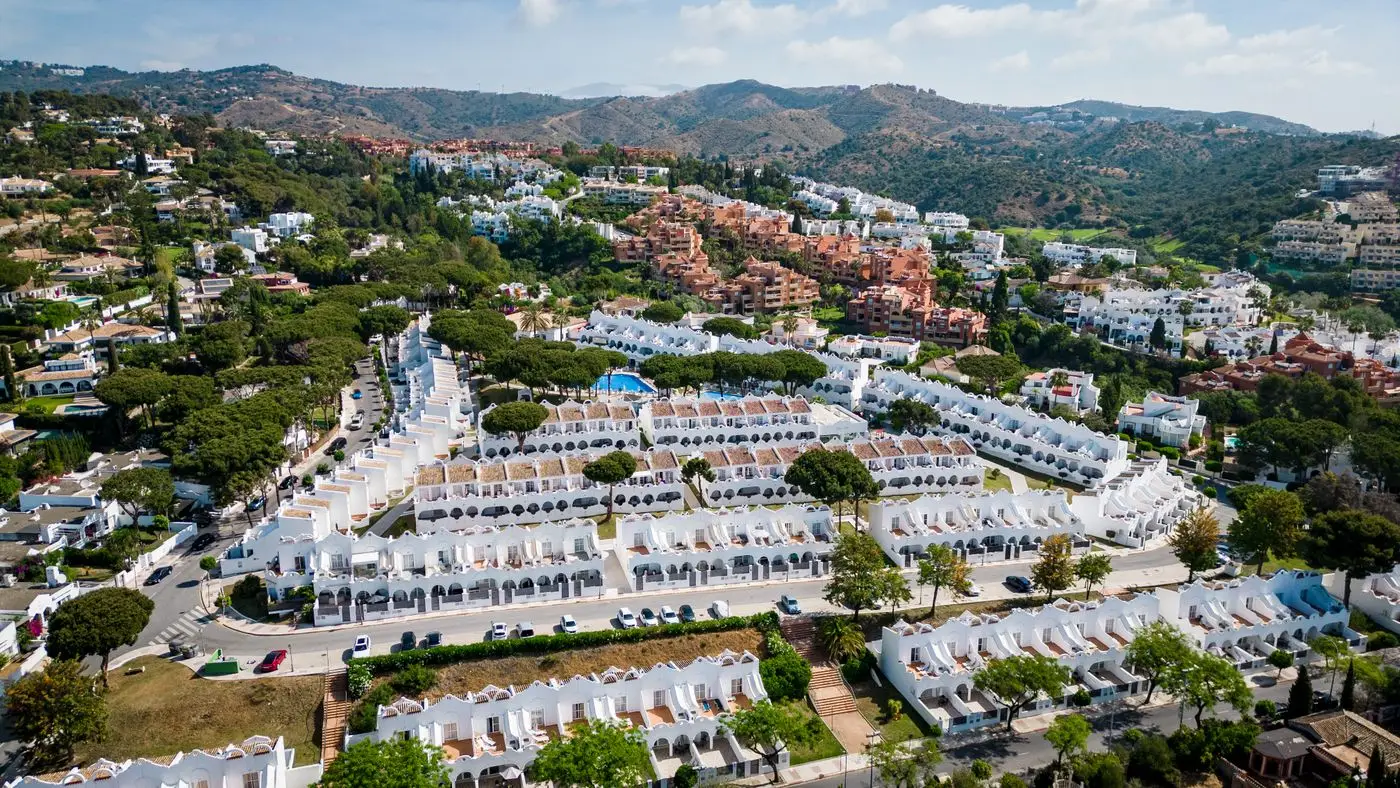
Most area guides to Marbella describe the atmosphere. Atmosphere is real, but it is not what makes two similar houses cost differently, and it is not what causes a purchase to go wrong. Three other things do: which municipality you are actually in, whether you are on the beach side or the mountain side of the main road, and what the planning framework permits on that specific plot.
This page covers those, area by area.
First, the thing that catches almost everyone
Not everything marketed as “Marbella” is in Marbella.
The municipality of Marbella runs roughly 27 kilometres of coast and includes San Pedro de Alcántara and Nueva Andalucía in the west, the old town and the Golden Mile in the middle, and Las Chapas, Elviria and Cabopino in the east.
Benahavís and Estepona are separate municipalities. So are Ojén and Istán. La Zagaleta, probably the most famous address in the region, is in Benahavís, not Marbella. Different town hall, different planning rules, different local tax rates, different IBI.
This matters practically, not pedantically. When you read that Marbella’s general plan situation is unusual, that applies to Marbella. A property in Benahavís is governed by Benahavís. Before you apply anything you have read to a specific property, confirm the municipality on the nota simple.
We advise across all three. Marbella, Estepona and Benahavís border one another and buyers look at them together. Serving them is not the same as blurring them, which is why each has its own page here rather than a paragraph under a Marbella heading.
Beachside and mountainside
Locally, properties are described as beachside or mountainside. Meaning south or north of the A-7 coastal road, which runs the length of the municipality.
It is the single most used distinction in Marbella pricing, and the reason is straightforward: beachside plots are finite and largely built out. The difference between two otherwise comparable properties on opposite sides of the same road is frequently substantial.
It is not automatically the better buy. Mountainside gives you elevation, views, more plot for the money and quieter surroundings; beachside gives you walkability to the sea, which is worth more depends on whether you will actually walk to the sea, which is a question about you rather than about the market.
The areas, west to east
San Pedro de Alcántara
A town in its own right, not a resort strip. With its own centre, its own market and a more ordinary Spanish daily life than anywhere else in the municipality. The boulevard built over the old through-road changed the town centre considerably.
Buyers who want to live in Spain rather than beside it tend to end up here. Apartment stock is more affordable than the Marbella side; villa stock exists inland and towards Guadalmina.
Nueva Andalucía
Inland behind Puerto Banús, built around golf courses, which is why it is often called the golf valley. Predominantly residential, quieter than the coast, and popular with families for that reason.
Practical note: much of the stock is in communities of owners with substantial shared facilities. Community fees and the community’s own statutes matter more here than in a standalone villa, particularly if letting is part of your plan.
Puerto Banús
The marina and its immediate surroundings. Whatever you think of it, it is one of the most recognisable addresses on the Spanish coast and the property market around it behaves accordingly.
Two things to weigh honestly: it is loud in season and quiet out of it, and a significant part of the nearby stock was built decades ago. The age of a building is not a problem in itself. What matters is whether what stands matches what was licensed, which is a documentary question.
The Golden Mile
The stretch between the old town and Puerto Banús, with the largest plots and the highest prices in the municipality. Covered separately, because the questions it raises are different.
Marbella old town and centre
The part of Marbella that existed before the coast was developed. Narrow streets, a working town centre, apartments rather than villas, and the only part of the municipality besides central San Pedro where living without a car is realistic.
Apartments in the historic centre are frequently in older buildings without lifts or parking. Both are worth confirming rather than assuming.
Sierra Blanca and the hillside urbanisations
Gated communities on the slopes behind the town, with views and security as the proposition. Access is by car in every case.
The hillside is where the planning question is sharpest. Villas here have been extended, terraced and rebuilt over decades, and the gap between what is on the ground and what is on the register is a realistic possibility rather than a theoretical one.
Los Monteros, Elviria, Las Chapas and Cabopino — the eastern beaches
Lower density, more space, further from everything. Elviria and Cabopino in particular function as their own small communities rather than as extensions of Marbella.
The trade-off is distance. Everything is a drive, and in August the drive is longer. In return, the plots are larger and the money goes further.
What to check, whichever area you choose
The list does not change by area, only in emphasis:
- Which municipality the property is in.
- The nota simple — ownership, charges, and how the property is described.
- Whether the built reality matches the licence, and whether the licence of first occupation exists.
- The community statutes and debt certificate, where there is a community of owners.
- The planning position of the plot under the framework currently in force.
On the hillside and on any villa that has been altered, item 3 is the one that decides whether a purchase is straightforward. On apartments in managed communities, item 4 is.
Which area is “best”?
There is no answer to that, and a firm that gives you one is describing its own inventory.
The useful version of the question is narrower: do you want to walk to things, or drive? Do you want to be among Spanish daily life, or among international residents? Is this a base for the winter, a summer address, or a permanent move? Those three answers narrow twenty-odd areas to two or three, and then the specific property matters more than the area does.
Frequently asked questions
Which areas are actually in the municipality of Marbella?
Broadly: San Pedro de Alcántara, Nueva Andalucía, Puerto Banús, the Golden Mile, the old town and centre, the hillside urbanisations including Sierra Blanca, and the eastern beaches. Los Monteros, Elviria, Las Chapas and Cabopino. Benahavís, Estepona, Ojén and Istán are separate municipalities, even though properties in them are frequently marketed as Marbella. We advise in Estepona and Benahavís as well; the boundary still decides which town hall issues the licences.
Is La Zagaleta in Marbella?
No. La Zagaleta is in the municipality of Benahavís. It is routinely described as Marbella in listings because of proximity and market positioning, but a different town hall sets its planning rules and local taxes.
What does beachside and mountainside mean?
South or north of the A-7 coastal road. It is the most used distinction in local pricing, because beachside land is finite and largely built out. Mountainside typically offers more plot, elevation and quiet for the money; beachside offers walkability to the sea.
Which area is best for families?
Nueva Andalucía is the one most often chosen for that reason. Residential, quieter than the coast, and close to schools and golf. San Pedro suits families who want an ordinary town centre. The eastern beaches offer more space at the cost of driving everywhere. The honest answer depends on schooling, which is worth resolving before choosing an area.
Where can I live in Marbella without a car?
Realistically only the old town and centre, and central San Pedro de Alcántara. Everywhere else in the municipality assumes a car, and there is no rail service to Marbella. The coastal line from Málaga ends at Fuengirola.
Does the area affect what checks I need?
The checks are the same everywhere; the emphasis shifts. On hillside villas and anything altered since construction, whether the built reality matches the licence is the decisive question. In managed communities, the community statutes and the debt certificate matter more. In every case, confirm the municipality first.
Are older buildings around Puerto Banús a problem?
Age itself is not. What matters is whether what stands matches what was licensed and what the registry records, and whether the licence of first occupation exists. That is a documentary question with a specific answer for each building, and it is answerable before you commit.
How much do community fees vary between areas?
Considerably, and they are set by each community of owners rather than by the area. Developments with extensive grounds, pools, lifts and security carry higher charges than a small block. Ask for the current figure and the last two sets of community minutes rather than working from an average.
Sources
- Ayuntamiento de Marbella (checked 2026-07-30)
- Ayuntamiento de Marbella: Urbanismo, Plan General (checked 2026-07-30)
- Colegio de Registradores: Land Registry of Spain (checked 2026-07-30)