
The Golden Mile, and the questions that come with the address
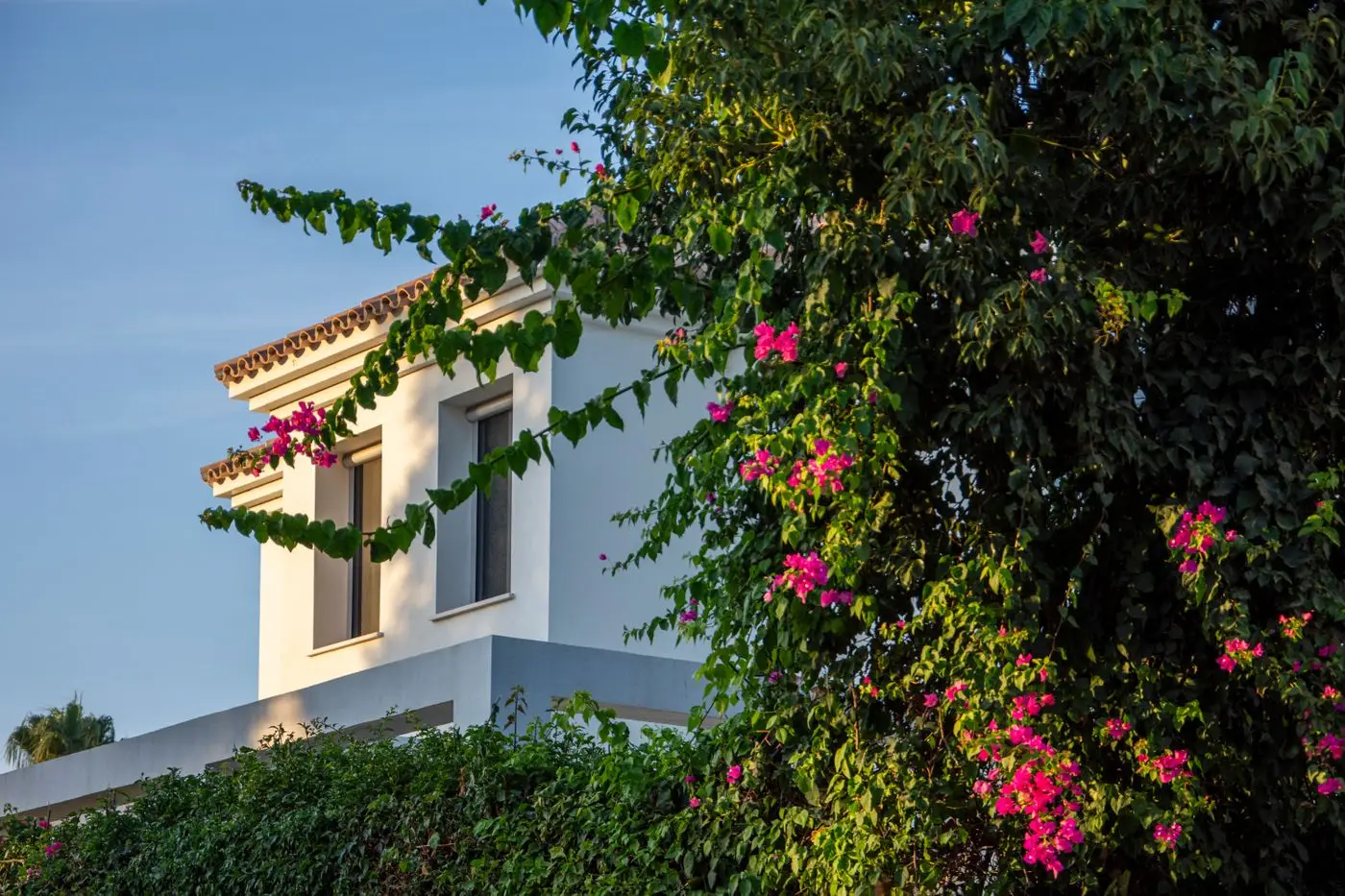
The Golden Mile is the stretch between Marbella’s old town and Puerto Banús. It carries the largest plots and the highest prices in the municipality, and it is the address people mean when they say Marbella without qualifying it.
It is also the part of the municipality where the questions in a purchase are least like the questions elsewhere. This page is about those.
What the name actually covers
There is no administrative boundary called the Golden Mile. It is a market term, and where it starts and stops depends slightly on who is selling.
Broadly it runs west from the edge of Marbella town towards Puerto Banús along the coastal corridor, taking in the beachside villas and gated developments on the sea side and, in most usages, the residential areas rising behind the road towards the sierra. Sierra Blanca and the hillside urbanisations above are often included in listings and are sometimes described as “Golden Mile” even when they sit noticeably above it.
The practical consequence: the term tells you very little about the specific property. Two listings both described as Golden Mile can be a beachfront plot and a hillside villa twenty minutes’ walk apart in altitude. Read the address, not the label.
Beachside and mountainside, which here is the whole conversation
The A-7 runs the length of the corridor, and the distinction between properties south of it and north of it is the most consequential single fact in Golden Mile pricing.
Beachside land is finite and largely built out. What comes to market is mostly existing houses on existing plots, and the scarcity is genuine rather than manufactured. There is no mechanism by which more beachside land appears.
Mountainside gives elevation, sea views over the top of the beachside stock, larger plots for the money and, generally, a gated community with security. It also means a car for everything, including the beach.
Neither is better. But a buyer comparing two prices without registering which side of the road each is on is not comparing like with like.
Why the planning question is sharper here than elsewhere
Marbella’s 2010 general plan was annulled by the Supreme Court in 2015, returning the municipality to a plan approved in 1986. A replacement has been working through approval, and the detailed instrument that settles what may be done on an individual plot comes later still.
On an apartment in a fully licensed development this is background. On the Golden Mile it frequently is not, for a specific reason: this is where the large plots are, and large plots are where things get built.
Over four decades, houses on this stretch have been extended, terraced, re-roofed, given guest annexes, pool houses, gyms, staff accommodation and basements. Some of that was licensed. Some was not. Some was licensed under a plan that was subsequently annulled.
None of that makes a property unbuyable. It makes it a property whose paperwork you read before you place a deposit rather than after.
The three documents that decide it
The nota simple. What the Land Registry records: who owns it, what charges sit on it, and, crucially here, what surface area and what buildings are registered. Compare the registered description against what you walked through.
The licence of first occupation, and the works licence behind it. This is the municipal confirmation that the completed building matches what was permitted. Ask for it. If it does not exist or does not cover the whole building, that is the point at which a lawyer needs the specific history of that specific house.
The planning position of the plot under the framework currently in force. Particularly relevant if any part of the asking price rests on what could still be built. Another storey, a second dwelling, a subdivision. Ask what document that expectation is based on.
The New Golden Mile is not the Golden Mile
This one costs people money, and it is entirely avoidable.
The New Golden Mile is a marketing name for the stretch west of San Pedro running towards Estepona. It is a different corridor, several kilometres away from the Golden Mile, and much of it sits in the municipality of Estepona rather than Marbella.
That is not a quibble about branding. It changes which town hall issues the licences, which general plan governs the plot and whose IBI bill arrives every year. Marbella’s planning history, the annulled 2010 plan and the return to 1986, is Marbella’s. It does not describe Estepona, and relaxing about a plot because you have read about Marbella is as much a mistake as worrying about one.
The New Golden Mile also has a different product mix: newer developments, more apartments, lower density in places, and prices that are generally not Golden Mile prices. Some buyers prefer it for exactly those reasons. The point is to choose it knowingly rather than to arrive there thinking you are somewhere else.
One question settles it, and the answer is on the nota simple: which municipality is the property in?
Buying an old villa on a large plot
Most of what changes hands beachside is not new. It is a house built in the sixties, seventies or eighties on a plot that would be impossible to assemble today, and the value sits in the land as much as the building.
That leads to a decision most buyers face here and few plan for: renovate or rebuild.
Renovating keeps the existing structure and, importantly, whatever rights that structure already enjoys. A house built to yesterday’s setbacks and footprint may exceed what today’s plan would allow. Demolish it and you may not be able to rebuild the same volume in the same place.
That single point is the most valuable thing on this page for anyone looking at an older beachside villa. Establish what could be rebuilt before you assume a knock-down is the plan. The answer comes from the town hall and an architect, not from the selling agent’s enthusiasm.
Rebuilding gives you a house that fits how people live now: insulation, glazing, plant rooms, garaging, and the sort of layout the older stock does not have. It also puts you into a licence process in a municipality whose planning framework is between instruments.
Either way, four things to establish before a deposit:
- The registered built area against what physically stands.
- What was licensed, and when, and whether the licence covers all of it.
- What the current framework would permit on that plot today.
- What the works themselves cost, which on a beachside plot with access constraints is rarely the headline figure a contractor gives on a first visit.
What the running costs actually look like at this level
Beyond community fees, a large house here carries costs that a buyer coming from an apartment does not anticipate.
The pool and the garden, which on a substantial plot in a dry climate means staff time and water, not a monthly product.
Electricity with a high contracted capacity, because air conditioning, pool plant and electric water heating all draw at once. The fixed component of a Spanish bill scales with that contracted capacity whether or not you are in the country.
Security, either through the community or privately.
Maintenance on the coast, which is genuinely higher than inland. Salt air is hard on metalwork, glazing seals and pool equipment.
Insurance, which for a high-value property with a pool and outbuildings is its own conversation rather than a standard policy.
Ask the seller for a full year of utility bills. It is the least glamorous request in a Golden Mile viewing and one of the most informative.
Communities, staff and running costs
Much of the Golden Mile’s gated stock sits in communities of owners with substantial shared infrastructure. Gardens, security, sometimes beach access. Community fees at this level are not a rounding error, and they are set by the community, not by the seller.
Ask for the current fee, the last two sets of community minutes, and a debt certificate. The minutes are the most useful document nobody requests: they tell you what the community has been arguing about, what works are pending and whether a special levy is coming.
What we would tell a buyer here
Three things, in order.
Confirm the municipality. Some properties marketed as Golden Mile are technically elsewhere. It changes the town hall, the planning rules and the local taxes.
Establish what is licensed before discussing price. On this stretch that is not a formality, and the answer occasionally changes what the property is worth.
Decide beachside or mountainside deliberately, rather than letting the first attractive listing decide it for you. They are different products at different prices, and the choice is about how you will actually use the house.
Frequently asked questions
Where does the Golden Mile in Marbella start and end?
There is no administrative boundary. It is a market term for the corridor running between Marbella’s old town and Puerto Banús. Where it is said to begin and end varies between listings, and the hillside areas rising behind it are sometimes included. Read the actual address rather than relying on the label.
Is Sierra Blanca part of the Golden Mile?
It is frequently marketed as such, though it sits above the coastal corridor rather than on it. It is within the municipality of Marbella either way. As with any listing on this stretch, the address and the municipality on the nota simple are more informative than the marketing description.
What is the difference between beachside and mountainside here?
Beachside means south of the A-7 coastal road, mountainside north of it. Beachside land is finite and largely built out, which is where the price premium comes from. Mountainside typically offers more plot, elevation and sea views over the beachside stock, generally within a gated community, at the cost of driving everywhere including to the beach.
Why do planning checks matter more on the Golden Mile?
Because this is where the large plots are, and large plots are where extensions, annexes, pool houses and basements get built. Marbella returned to a 1986 general plan after the Supreme Court annulled the 2010 plan in 2015, so a building differing from what was licensed is a realistic possibility rather than a remote one, most likely precisely on properties that have been altered over decades.
What is the licence of first occupation and why do you keep mentioning it?
It is the municipal licence confirming that a completed building matches the works licence it was granted and may be occupied. On this stretch its absence, or its covering only part of what now stands, is common enough that we treat requesting it as standard rather than as a precaution.
What should I ask about the community of owners?
The current fee, the last two sets of community minutes and a debt certificate. The minutes are the document nobody requests and the most revealing: they show pending works, disputes and whether a special levy is being discussed. Unpaid community charges can attach to the property.
Is the New Golden Mile part of the Golden Mile?
No. The New Golden Mile is a marketing name for the stretch west of San Pedro towards Estepona, several kilometres away, and much of it lies in the municipality of Estepona rather than Marbella. That changes the town hall, the general plan and the IBI. Marbella’s planning history does not describe it.
Should I renovate or knock down an older beachside villa?
Establish what could be rebuilt before you assume a knock-down is the plan. A house built to yesterday’s setbacks and footprint may exceed what today’s framework would allow, so demolishing it can mean losing volume you cannot recover. The answer comes from the town hall and an architect.
What running costs should I expect on a large villa here?
Pool and garden as staff time and water rather than a monthly product, electricity with a high contracted capacity whose fixed component you pay whether or not you are here, security, coastal maintenance that is genuinely higher than inland, and insurance that is its own conversation. Ask the seller for a full year of utility bills.
Can I let a Golden Mile property to holidaymakers?
Andalusia requires a declaration to the regional tourism register, which issues a registration number that must appear in advertising, separately, and this is frequently the binding constraint on gated developments here. The community’s own statutes may restrict or prohibit tourist letting regardless of what the region permits. Check both before relying on letting income.
Is a property described as Golden Mile always in Marbella?
Not always. Some listings apply the term generously, and neighbouring municipalities, Benahavís in particular, are routinely marketed under Marbella addresses. The municipality on the nota simple is the answer, and it determines which town hall’s planning rules and local taxes apply.
What is the single most useful thing to do before making an offer here?
Obtain a nota simple and compare the registered description against what you walked through, then ask for the licence of first occupation. Both are inexpensive, both can be done before any deposit is placed, and between them they answer most of what makes a Golden Mile purchase go wrong.
Sources
- Ayuntamiento de Marbella: Urbanismo, Plan General (checked 2026-07-30)
- Ayuntamiento de Marbella: Nuevo Planeamiento Municipal (PGOM/POU) (checked 2026-07-30)
- Colegio de Registradores: Land Registry of Spain (checked 2026-07-30)
- Ayuntamiento de Marbella (checked 2026-07-30)