
Buying in Estepona, and what changes when you cross the municipal line
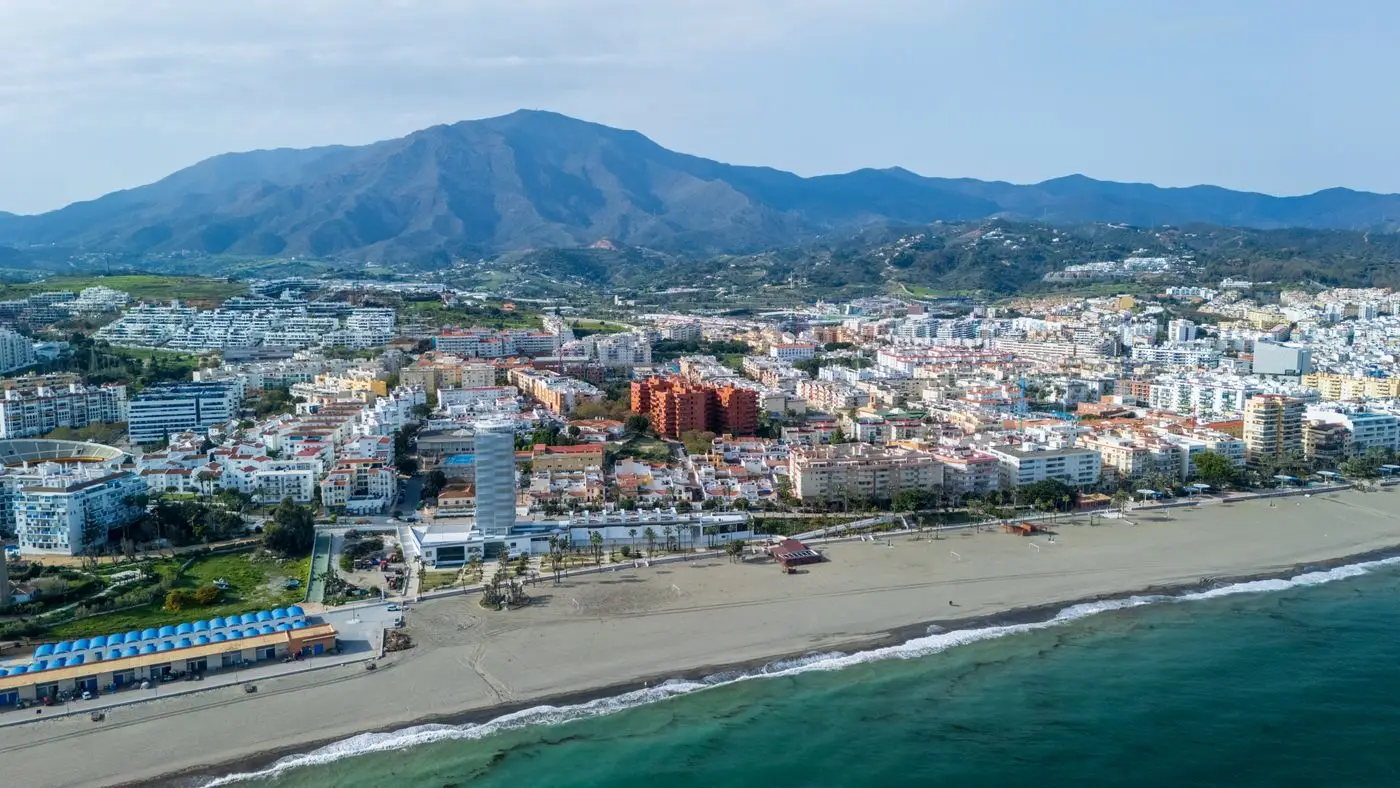
Estepona begins where Marbella’s municipality ends, on the western side. In practice buyers look at both, often on the same trip, and listings move fluidly between them. “Marbella area” covers a great deal of ground.
Legally the two are not the same place, and the differences are not cosmetic. This page sets out what actually changes when you cross the boundary, and what does not.
What changes: everything municipal
The town hall. Estepona has its own Ayuntamiento, its own planning department and its own licensing. Anything that involves a licence — the works licence, the licence of first occupation, a later extension — goes through Estepona, not Marbella.
The general plan. Estepona has its own general plan, administered by its own town hall. Marbella’s planning history does not apply here. The Supreme Court’s 2015 annulment of Marbella’s 2010 plan, and the PGOM that has been working through approval to replace it, are Marbella matters. Reading about Marbella’s situation and assuming it describes Estepona is a mistake we see regularly, and it works in both directions. People either worry about something that does not apply, or relax about something they have not checked.
What applies to a specific plot in Estepona is a question for Estepona’s planning department, and the town hall publishes its planning documents.
IBI and local charges. The annual municipal property tax is set within statutory limits by each municipality. Two comparable properties either side of the boundary can carry different annual bills.
The local market. Estepona and Marbella have different supply, different buyer profiles and different price levels. A comparable drawn from Marbella does not price a property in Estepona.
What stays the same: everything regional and national
This is the part that reassures people, and it is worth being precise about.
Transfer tax and stamp duty are set by Andalusia, not by the municipality. Estepona, Benahavís and Marbella are all in Andalusia, so the same regional rules apply. The authority is the Agencia Tributaria de Andalucía.
Tourist letting runs through the same Andalusian system: a declaration to the regional tourism register, which issues a registration number that must appear in any advertising. Whether a specific property qualifies, and what the community of owners permits, are separate questions, but the mechanism is regional, not municipal.
The purchase process is national: NIE, reservation, checks, private contract, completion before a notary, registration at the Land Registry. The Land Registry and the Cadastre work the same way.
Non-resident tax obligations are national and unchanged.
So: the paperwork you file is largely the same; the office that issues your licences is not.
The new-build question
Estepona has seen substantial new development in recent years, and a larger share of what a buyer is shown here is a first transfer from a developer than is typical further east.
That has a direct tax consequence rather than a vague one. A first transfer from the developer attracts VAT plus stamp duty; a resale attracts transfer tax. The two produce different totals on an identical price, and the difference is not marginal.
Two things buyers get wrong:
- “New build” means the first transfer from the developer. A two-year-old apartment being sold on by its first owner is a resale for tax purposes, even if nobody has ever lived in it.
- Off-plan is a different risk profile from completed new build. Payments made before completion should be secured under the applicable guarantee arrangements, and what those are, and whether they are actually in place. Is a question for your lawyer before any money moves, not after.
The checks do not change
Whatever the municipality, the same documents decide whether a property is what it appears to be:
- The nota simple — who owns it, what charges sit on it, how it is described.
- The cadastral record, and whether it agrees with the registry.
- The licence of first occupation, and the works licence behind it — from the Estepona town hall.
- The community debt certificate and the community statutes, where there is a community of owners.
- The planning position of the plot under Estepona’s own framework.
- Whether the reference value exceeds the agreed price, which decides the tax base.
Item 3 changes office. Item 5 changes framework. The rest is identical.
Estepona or Marbella?
We advise on both, so we have no reason to push you toward either.
The honest framing is that they are different products rather than a better and a worse one. Estepona’s town centre is more compact and more Spanish in daily feel; Marbella’s Golden Mile carries the addresses and the prices that go with them. Estepona is further from Málaga airport; the coastal drive from the airport passes through Marbella to reach it.
If you are weighing them, the useful exercise is not to compare towns. It is to compare two specific properties with their full cost picture, their licence position and their community charges on the table. That comparison usually answers the question by itself.
The town has changed, and that is visible in the stock
Estepona has spent the past decade on a visible programme of public works: the old town repaved and planted, the promenade extended, a boulevard cut through toward the sea. Whatever one thinks of the results, they explain the property market you find today.
The old town is a genuine centre, walkable and lived in year-round rather than seasonally. That matters more to a resident than to a holidaymaker, and it is the single clearest difference from a purpose-built resort.
Much of the coastal stock is recent. New and near-new developments dominate long stretches west and east of the centre, which affects everything that follows: the community charges, the state of the paperwork, the age of the installations.
The hinterland is a separate market. Behind the town the land rises quickly toward Benahavís and the Sierra Bermeja, with larger plots, older houses and a completely different set of questions about land classification and permits.
The port and the golf area each form their own small sub-market with their own character.
The practical consequence: an average price for “Estepona” is even less meaningful than one for Marbella, because it mixes a five-year-old apartment on the promenade with a rural house on a large plot inland.
What to ask about a recently built apartment
If you buy new or near-new, which is likely here, the questions are not the ones you would ask about a forty-year-old villa.
Where the community is in its life cycle. A new development often starts with the developer controlling the community. The charge in year one is not necessarily the charge in year five, once the developer’s subsidy ends and the pool, lifts and gardens are being maintained at real cost.
Whether the snagging period is still running. Spanish law gives buyers of new construction warranty periods of different lengths for different classes of defect, running from completion of the works. Ask when they started and what has already been claimed.
Who holds the guarantees. Structural warranty documentation should be identifiable, and the insurance behind it should be named.
The reserve fund and the minutes. A young community with a thin reserve fund and a large shared pool is the classic setting for a special levy in year six.
Whether letting is permitted. New developments frequently restrict short-term letting in their statutes, and buyers who financed on projected rental income find this out late.
None of this is a reason to prefer older stock. It is a different list, and using the villa list on a new apartment misses everything that matters.
Frequently asked questions
Is Estepona part of Marbella?
No. Estepona is a separate municipality in the province of Málaga, bordering Marbella to the west. It has its own town hall, its own planning framework and its own local tax rates, even though listings frequently market properties there as “Marbella area”.
Does Marbella’s planning situation affect Estepona?
No. The Supreme Court’s 2015 annulment of Marbella’s 2010 general plan, and the PGOM that has been going through approval to replace it, concern the municipality of Marbella. Estepona has its own general plan administered by its own town hall, and the planning position of a specific plot is a question for Estepona’s planning department.
Is the purchase tax different in Estepona?
No. Transfer tax and stamp duty are set by Andalusia, not by the municipality, so the same regional rules apply across Estepona, Benahavís and Marbella. What does differ municipally is IBI, the annual property tax, which each town hall sets within statutory limits.
Can I let a property in Estepona to holidaymakers?
The mechanism is the same as elsewhere in Andalusia: a declaration to the regional tourism register, producing a registration number that must appear in advertising. Whether a specific property qualifies, and whether the community of owners permits tourist letting, still need checking separately.
Is Estepona better value than Marbella?
They are different markets rather than one being cheaper like for like, and any general answer would be a claim about averages that describes no actual property. The useful comparison is between two specific properties with their full costs, licences and community charges set out. Which usually settles it without needing a view on the towns.
What should I know about buying new build in Estepona?
That the tax treatment differs from a resale: a first transfer from the developer attracts VAT plus stamp duty rather than transfer tax, and the totals differ meaningfully on the same price. Also that “new build” means the first transfer. A recently built property being resold by its first owner is a resale for tax purposes.
What extra care does off-plan need?
Payments made before completion should be covered by the applicable guarantee arrangements. Whether those are genuinely in place for a specific development is a question for your lawyer before any money moves. This is separate from the question of whether the development itself is licensed.
Do you advise on Estepona as well as Marbella?
Yes. Estepona and Benahavís border Marbella and we work across all three. The advisory approach is identical; what changes is which town hall issues the licences and which planning framework governs the plot.
Why is an average price for Estepona misleading?
Because it mixes very different markets: a recent apartment on the promenade, a house in the walkable old town, and a rural property inland toward Benahavís with its own land-classification questions. The average describes none of them.
What should I ask about a new-build apartment’s community?
Where the community is in its life cycle. A new development often starts with the developer in control, and the charge in year one is not the charge in year five, once any developer subsidy ends and pool, lifts and gardens are maintained at real cost. Ask for the reserve fund and the minutes.
Are there warranties on new construction in Spain?
Spanish law gives buyers of new construction warranty periods of different lengths for different classes of defect, running from completion of the works. Ask when they started, what has already been claimed, and who holds the structural warranty documentation.
Can I let a new-build apartment to holidaymakers?
That is two separate questions. The regional tourism registration is one; the community is the other — since April 2025, starting tourist letting requires its prior express approval, so statutes that are merely silent are no longer enough. A state registration number was required on top from July 2025 until May 2026, when the Tribunal Supremo annulled that procedure. Buyers who counted on rental income tend to find all of this out late.
Sources
- Ayuntamiento de Estepona (checked 2026-07-30)
- Ayuntamiento de Estepona: PGOU documents (checked 2026-07-30)
- Agencia Tributaria de Andalucía: transfer tax and stamp duty (checked 2026-07-30)
- Junta de Andalucía: tourist accommodation register (checked 2026-07-30)
- Colegio de Registradores: Land Registry of Spain (checked 2026-07-30)